NASA's Alabama center will manage the development of the lander meant to take humans to the moon in 2024 — an announcement that has drawn ire from Texas lawmakers given Houston's role in the first lunar landing 50 years ago.
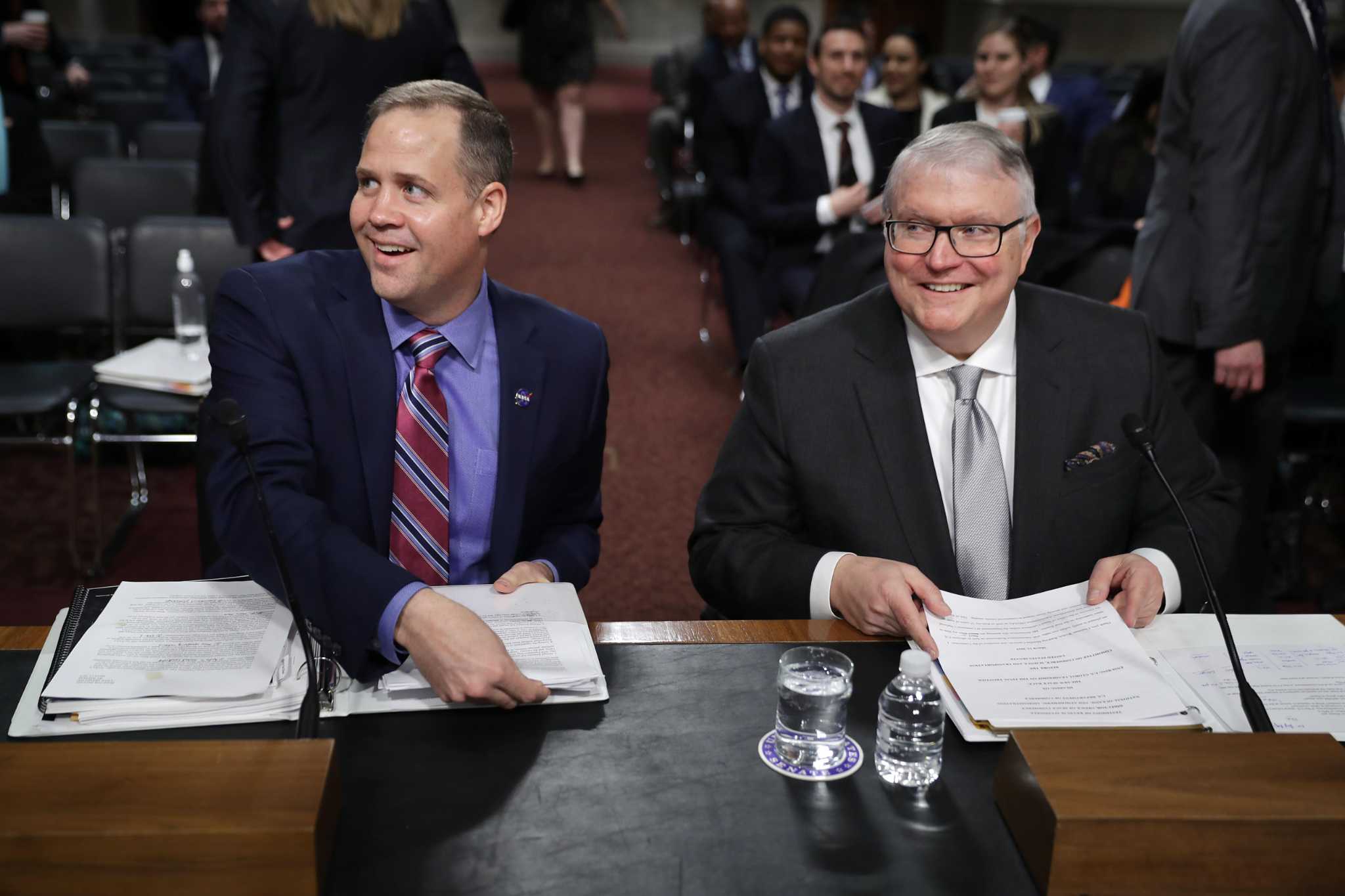
Agency Administrator Jim Bridenstine made the announcement Friday from the Marshall Space Flight Center in Alabama. Marshall was the best center for the job, he said, because of its history working with landing systems, such as the one built for the now-canceled robotic moon mission in search of water.
"I will say that this is not a decision that was made lightly," Bridenstine said. "A lot of hard work has been done here in Huntsville over 10 years now."
Marshall also is in charge of managing the agency's behemoth Space Launch System rocket, which is years behind schedule and billions of dollars over budget. SLS is NASA's only rocket capable of transporting humans to the moon.
Texas lawmakers, undoubtedly, were not happy by Friday's announcement. When rumors began circulating that Alabama would receive this designation, U.S. Rep. Brian Babin, along with U.S. Sens. Ted Cruz and John Cornyn, sent a letter to the administrator urging him to reconsider.
"The Johnson Space Center has served as NASA's lead center for human spaceflight for more than half a century," they wrote. " 'Houston' was one of the first words ever uttered on the Moon, and Houston, the city that last sent man to the Moon, should be where the lander that will once again send Americans to the lunar surface is developed."
Johnson was in charge of the lunar lander program during the Apollo missions.
Babin, a Republican whose district includes the Johnson Space Center, originally was scheduled to attend the announcement but he did not show. His office did not immediately respond to a request for comment.
Bridenstine said he understood the concerns of the Texas lawmakers, but noted that Johnson still will work on the landing systems. The Alabama center will get 140 jobs for this project. Houston will get 87.
Johnson personnel will be in charge of "all aspects related to preparing the landers and astronauts to work together," according to NASA. The Houston center currently manages the Lunar Orbital Platform-Gateway, a mini-space station NASA wants to build orbiting the moon, and all Artemis moon missions.
"We love the work Johnson does and we certainly love the history of Johnson as well," he said. "I want to make sure we don't create a narrative that this is us against them. When we go to the moon there will be plenty of work for them there."
Since the 1960s, Johnson has been home to the nation's astronaut corps, served as the hub for human spaceflight research and training and is the storied home of mission control. It remains the base of operations for the International Space Station.
Earlier this year, the Trump administration directed NASA to put humans on the moon four years earlier than planned, in 2024 instead of 2028. The project has been dubbed Artemis.
Since then, the space agency has been scrambling to put together a plan on such a short timeline — especially because its behemoth Space Launch System rocket is years behind schedule and billions of dollars over budget. SLS, which also is being managed out of the Alabama center, is NASA's only rocket capable of transporting humans to the moon.
Bridenstine has said that putting humans on the moon by 2024 will take up to $30 billion over the next five years. So far, the Trump administration only has requested $1.6 billion from Congress for Artemis — primarily to fund development of a lunar lander.
Last month, Bridenstine told Congress that a full budget plan for the project won't be ready until February — almost a full year after the accelerated timeline announcement.
Despite the news Friday, Lisa Watson-Morgan, who will be in charge of the lunar lander effort at Marshall, said the Alabama center will continue to partner with other NASA centers, just as it has done in the past.
"That's how we bring out the best," Watson Morgan said.
Alex Stuckey writes about NASA and science for the Houston Chronicle. You can reach her at alex.stuckey@chron.com or Twitter.com/alexdstuckey.
Bagikan Berita Ini


0 Response to "NASA's Johnson Space Center will not lead lunar lander development for moon 2024 - Houston Chronicle "
Post a Comment